






Weight Watchers Scale Manual: A Comprehensive Guide
Navigating your weight loss journey requires a reliable tool; this manual provides comprehensive guidance for your Weight Watchers scale, ensuring accurate tracking and optimal results․
Understanding Your Weight Watchers Scale
Your Weight Watchers scale is more than just a device to display numbers; it’s a sophisticated tool designed to integrate seamlessly with the WW ecosystem, providing valuable insights into your progress․ These scales, often co-branded with companies like Tefal, automatically calculate your Body Mass Index (BMI), offering a broader perspective on your health beyond just weight․
Understanding the core functionality is key․ The scale utilizes advanced sensors to measure weight, and many models feature Bluetooth connectivity for automatic data syncing with the WW app․ This eliminates manual logging, ensuring your weight is consistently tracked․ Different models cater to varying needs, with some including features like body water percentage and muscle mass estimation․
However, inconsistencies can occur, necessitating calibration using a supplied calibration weight․ The scale’s accuracy relies on proper setup, battery health, and a stable surface․ Familiarizing yourself with the display and buttons is crucial for navigating the scale’s features and interpreting the readings correctly․ Remember, consistent and accurate weighing practices are fundamental to successful weight management․
Scale Models and Features
Weight Watchers offers a diverse range of scales, catering to different preferences and budgets․ The PN15074 Personal Points Food Scale stands out with its specific focus on portion control and nutritional information, assisting with precise food tracking․ Beyond this, standard bathroom scales are available, often co-branded with Tefal, integrating BMI calculation for a holistic health assessment․
Key features commonly found across models include high-precision sensors for accurate weight measurement, large, easy-to-read displays, and Bluetooth connectivity for seamless data synchronization with the WW app․ Some scales boast advanced functionalities like body water percentage, muscle mass estimation, and metabolic age calculation, providing a comprehensive body composition analysis․
The WW by Conair app compatibility enhances the user experience, allowing for detailed progress tracking and personalized insights․ Understanding the specific features of your model is crucial for maximizing its benefits․ Regularly checking for software updates via the app ensures optimal performance and access to the latest functionalities․
Initial Setup and Battery Installation
Before first use, carefully unpack your Weight Watchers scale and remove all packaging materials․ Battery installation is typically straightforward: locate the battery compartment (usually on the back or underside of the scale) and insert the required batteries, observing the correct polarity (+ and -) as indicated․ Ensure the battery cover is securely fastened․
Upon inserting the batteries, the scale should briefly display a welcome message or initiate a self-test․ If the scale doesn’t power on, double-check the battery installation and replace the batteries with fresh ones if necessary․ Avoid mixing old and new batteries, or different battery types․
For scales requiring initial setup, follow the on-screen prompts or refer to the WW app instructions․ This may involve selecting your preferred units of measurement (pounds, kilograms, or stones) and setting a user profile․ Proper initial setup ensures accurate readings and seamless synchronization with your WW account․
Connecting to the WW App (Bluetooth Pairing)
To seamlessly track your progress, connecting your Weight Watchers scale to the WW app via Bluetooth is essential․ First, ensure Bluetooth is enabled on your smartphone or tablet․ Open the WW app and navigate to the “Devices” or “Scale” section within the settings․
Select “Add Scale” or a similar option, and the app will begin searching for nearby Bluetooth devices․ Your Weight Watchers scale should appear in the list of available devices․ Select your scale from the list to initiate the pairing process․ You may be prompted to enter a pairing code displayed on the scale’s screen․
Once paired, the app will automatically sync your weight data․ If pairing fails, ensure the scale is close to your device, restart the scale and your device, or try re-installing the WW app․ Successful pairing allows for effortless data transfer and comprehensive weight management․
Understanding the Display and Buttons
Your Weight Watchers scale features a clear digital display providing essential information․ Typically, the display shows your current weight, battery level, and Bluetooth connectivity status․ Some models also display BMI calculations directly on the screen․
The scale usually incorporates a few key buttons for operation․ A “Power” button turns the scale on and off․ “User” or “Set” buttons allow you to cycle through user profiles if multiple individuals are using the same scale․ Holding these buttons may initiate calibration or reset functions․
Familiarize yourself with the button layout and display indicators․ A flashing display often indicates low batteries or a pairing request․ Refer to the specific model’s diagram in this manual for precise button functions and display interpretations․ Understanding these elements ensures accurate and efficient scale usage․
Weighing Yourself Accurately
Achieving precise weight measurements requires consistent technique․ Always place your scale on a hard, level surface – carpet or uneven flooring can cause inaccuracies․ It’s best to weigh yourself at the same time each day, ideally in the morning before breakfast and after using the restroom, for consistent readings․
Remove shoes and heavy clothing before stepping onto the scale․ Distribute your weight evenly, standing still with your feet shoulder-width apart․ Avoid shifting or bouncing, as this can affect the reading․ Ensure the scale is activated before you step on; some models require a tap to wake up․
Allow the scale to stabilize and display a consistent weight before noting the result․ Remember that slight fluctuations are normal; focus on long-term trends rather than daily variations․ Consistent methodology is key to reliable weight tracking․
Troubleshooting: Scale Won’t Turn On
If your Weight Watchers scale fails to power on, begin with the most common solution: check the batteries․ Ensure they are correctly installed, observing the proper polarity (+ and -)․ Even new batteries can sometimes be faulty, so try replacing them with a fresh set from a reputable brand․
Press and hold the USER and SET buttons simultaneously for several seconds․ This can sometimes reset the scale and restore power․ If this doesn’t work, verify that the battery compartment is clean and free of corrosion․ Corrosion can prevent proper contact․
If the issue persists after these steps, consider that the scale may require professional attention․ Contact Weight Watchers support or the manufacturer for further assistance․ Do not attempt to disassemble the scale yourself, as this could void any warranty and potentially cause damage․

Troubleshooting: Inconsistent Readings
Experiencing fluctuating or inconsistent weight readings on your Weight Watchers scale can be frustrating․ First, ensure the scale is placed on a hard, level surface․ Carpets or uneven floors can significantly impact accuracy․ Avoid placing the scale near walls or other objects that might interfere with its operation․
Utilize the provided calibration weight to recalibrate the scale․ Place the calibration weight on the scale platform as instructed in the manual, and follow the calibration procedure․ This process helps to ensure the scale is accurately measuring weight․
If inconsistencies continue, try weighing yourself multiple times in succession․ Averages can help minimize the impact of slight variations․ Also, consider disabling weight synchronization within the Apple Health app, as reported by some users, to resolve potential conflicts․ If problems persist, contact Weight Watchers support․
Calibration Process Using Calibration Weight
To ensure accurate measurements, your Weight Watchers scale may require calibration using the supplied calibration weight․ Begin by placing the scale on a firm, level surface – crucial for a reliable calibration․ Access the calibration mode; this is typically initiated by pressing and holding a specific button combination (refer to your scale’s specific manual for instructions, often involving the ‘USER’ and ‘SET’ buttons)․
Once in calibration mode, the display will likely prompt you to place the calibration weight on the scale platform․ Ensure the weight is centered․ The scale will then register the weight and adjust its internal settings accordingly․
Follow the on-screen prompts carefully․ The display will indicate when the calibration is complete․ Repeat the process if necessary․ Proper calibration is vital for consistent and trustworthy weight readings, contributing to a more effective weight management journey․
Syncing Data with Apple Health
Integrating your Weight Watchers scale with Apple Health allows for a centralized view of your health data․ To begin, ensure both your scale and iPhone are connected via Bluetooth through the WW by Conair app․ Within the app settings, locate the “Connect to Apple Health” option and grant the necessary permissions․
You’ll be prompted to select which data types you wish to share – typically weight measurements․ Confirm your selections and allow the app to access Apple Health․ Initial synchronization may take a few moments․ After successful pairing, your weight readings will automatically transfer to Apple Health each time you weigh yourself․
If synchronization issues arise, try disabling and re-enabling the Apple Health connection within the WW app․ Some users have reported resolving issues by temporarily disabling weight synchronization within the Apple Health app itself, then re-enabling it․
WW by Conair App Login Issues
Encountering difficulties logging into the WW by Conair app can be frustrating․ First, verify your username and password are correct, paying close attention to capitalization․ If you’ve forgotten your credentials, utilize the “Forgot Password” link on the login screen to reset them via email․ Ensure you check your spam or junk folder for the reset email․
If password reset doesn’t resolve the issue, try uninstalling and reinstalling the app on your smartphone (both iPhone and Galaxy devices have reported issues)․ Clear the app’s cache and data in your phone’s settings before reinstalling․ Some users have found success by logging in on a different device to confirm account functionality․
If problems persist, contact WW by Conair’s customer support directly․ They may require account verification information to assist you․ Ensure your app is updated to the latest version, as older versions may have compatibility issues․
Understanding BMI Calculation on the Scale
Your Weight Watchers scale, particularly models from Tefal and Weight Watchers collaborations, automatically calculates your Body Mass Index (BMI)․ BMI is a numerical value derived from your weight and height, providing an estimate of body fat․ The scale uses the standard formula: weight (kilograms) divided by height (meters squared)․
The resulting BMI score falls into categories: Underweight (below 18․5), Normal weight (18․5-24․9), Overweight (25-29․9), and Obese (30 or higher)․ The scale displays your BMI, helping you interpret your weight in relation to your height; Remember, BMI is a screening tool and doesn’t directly measure body fat․
Factors like muscle mass can influence BMI; a muscular individual might have a higher BMI without excess body fat․ Use the BMI reading as a general guide alongside other health indicators and consult with a healthcare professional for a comprehensive assessment․
Personal Points Food Scale (PN15074) Specifics

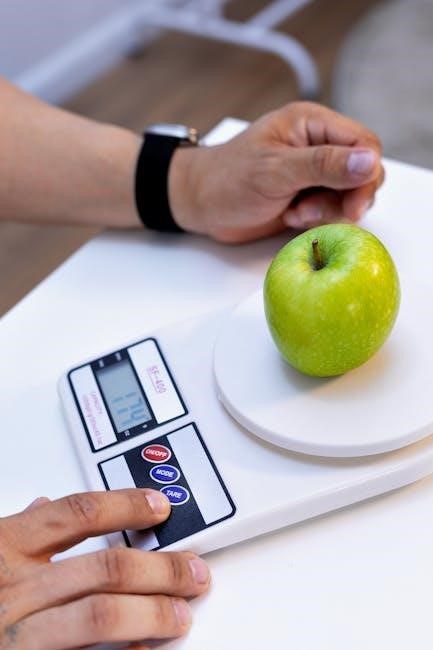
The Weight Watchers PN15074 Personal Points Food Scale is designed for precise portion control, crucial for the Personal Points program․ This scale goes beyond simple weight measurement, assisting in accurately tracking food intake․ The user manual (dated June 23, 2017) details its unique features and operation․
This model likely features a large display for easy readability and may include functions for zeroing or tare, allowing you to subtract the weight of a container․ It’s important to consult the manual for specific instructions on navigating the scale’s functions and understanding its display․
Proper use involves placing food directly on the platform and reading the weight in your preferred units (grams or ounces)․ The scale’s accuracy relies on a stable surface and correct battery installation․ Refer to the manual for troubleshooting steps if issues arise, such as incorrect readings or power failures․
Resetting Your Weight Watchers Scale
If your Weight Watchers scale is malfunctioning or displaying inaccurate data, a reset can often resolve the issue․ Users reporting issues with their scales, particularly those unable to power on despite checking batteries, have found success with a reset procedure․ This typically involves pressing and holding specific buttons – often the ‘USER’ and ‘SET’ buttons simultaneously – for a defined period․
The exact reset method varies depending on the scale model, so consulting your specific user manual is crucial․ A reset will clear any stored data, including user profiles and settings, returning the scale to its factory defaults․ This means you’ll need to re-establish Bluetooth connections and re-enter your personal information․
Before attempting a reset, ensure the batteries are fresh and correctly installed․ If the reset doesn’t resolve the problem, further troubleshooting steps, or contacting customer support, may be necessary․ Remember to synchronize your data before resetting, if possible․
Scale Maintenance and Cleaning
Maintaining your Weight Watchers scale ensures its longevity and accuracy․ Regular cleaning is essential to remove dust, dirt, and residue that can accumulate on the surface․ Use a slightly damp cloth – avoid excessive water or harsh cleaning chemicals, as these can damage the sensors and electronic components․
Always ensure the scale is completely dry before use․ Avoid placing heavy objects on the scale when not in use, as this could potentially damage the internal mechanisms․ Store the scale in a dry, stable location, away from direct sunlight and extreme temperatures․
Periodically check the battery compartment for any signs of corrosion․ Replace batteries as needed, using the correct type specified in the manual․ Proper care and maintenance will help your Weight Watchers scale provide consistent and reliable readings for years to come, supporting your weight management goals․
Finding Additional Support and Manuals Online
Need further assistance with your Weight Watchers scale? Numerous online resources are available to provide support and detailed information․ The official Weight Watchers website (and Conair, for WW by Conair models) offers a comprehensive FAQ section, troubleshooting guides, and downloadable user manuals in PDF format․
You can often find solutions to common issues, such as app connectivity problems or inaccurate readings, through their online support portals․ Additionally, online forums and communities dedicated to Weight Watchers often feature discussions where users share tips and solutions․
Searching online for your specific scale model number (e․g․, PN15074) will yield targeted results․ Remember to download manuals only from trusted sources to avoid potential security risks․ Weight Watchers also provides customer support via email or phone, offering personalized assistance when needed․